Commission clawback in the UK: what is legal and what to check
General information, not legal advice. For your own contract, ask ACAS or a solicitor.
Is a clawback legal? Only with authority. Section 13 of the Employment Rights Act 1996 needs a contract term or your written agreement. ACAS lists the same.
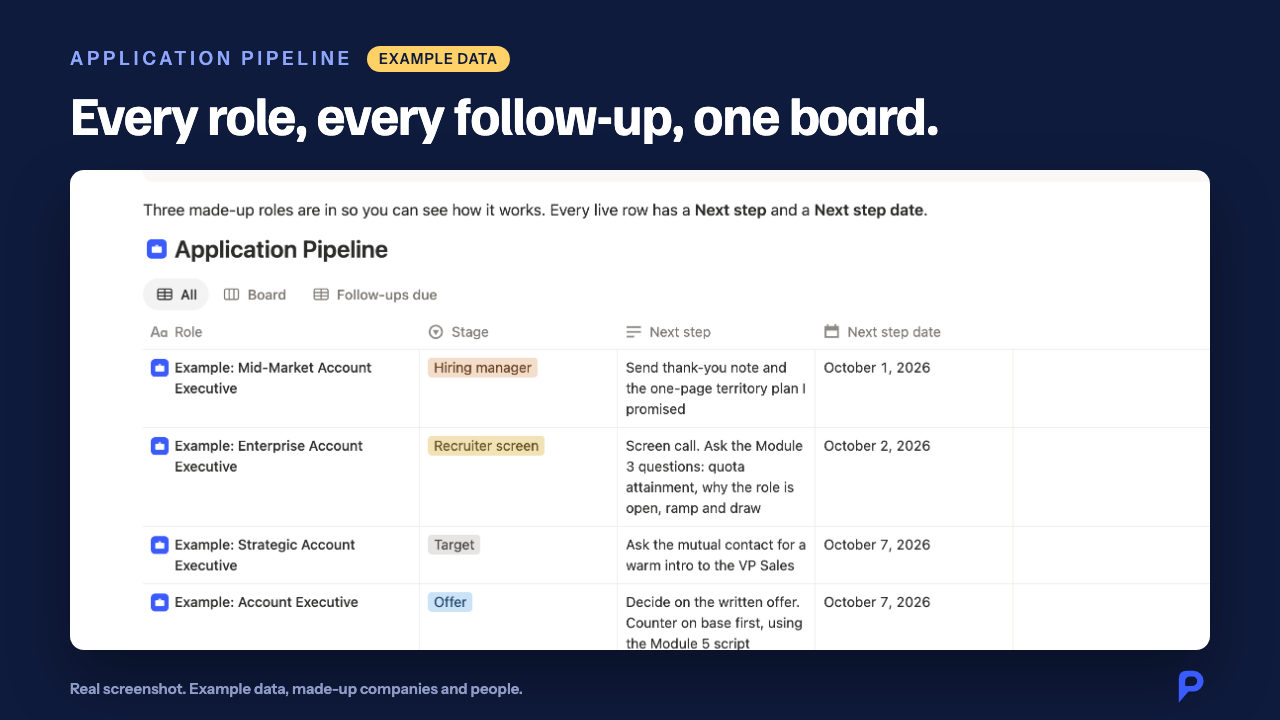
Reading an offer with a clawback clause in it? The Sales Job Search Kit (£14 + VAT) gives you a place to price it. Module 4 Offer Comparison is an offers database that works out year-one pay. It has a fine print section on caps, clawbacks and payment timing. Module 5 Negotiation Scripts has an in-writing checklist and a counter-offer email. It also has replies to "this is our best offer". Module 2 Application Pipeline tracks the offers you have open. Get the Sales Job Search Kit.
What a clawback is
A clawback lets your employer take back commission it has already paid you. Typical reasons are a cancelled deal, a pricing error or a customer who never paid. This page covers what the sources say about when that is allowed.
1. Is the clawback part of your contract?
Take Ms A Dunnington v NGP Utilities Ltd, heard by an employment tribunal at North Shields. She was a business account manager brokering energy contracts. Her contract paid commission once the company received the supplier's payment. She had to still be employed.
The judge's earlier ruling found no clawback terms were notified when she accepted. The reconsideration judgment says the employer "cannot lawfully" impose conditions "unilaterally" after the contract is made. It adds that nothing stopped the employer writing a clawback term in at the start.
The July 2019 judgment on reconsideration reopened the case on a different point. The employer argued that she had sold contracts it said were mis-sold. The judge agreed to hear more evidence on that. The claimed sums were over £120,000.
What to take from it: a clawback you were never told about is hard to apply. Ask to see the wording before you sign.
2. Fair triggers and broad wording
Sprintlaw writes for employers. A broad right to reclaim commission at any time, it says, is more open to challenge. A clause tied to specific events is safer. Its examples include customer non-payment, refunds above a threshold, fraud and cancellation within an agreed period.
Check your clause for:
- The events that trigger a clawback.
- The time window, for example 90 days from payment.
- How it is taken back: set against future commission, or repaid.
3. Deductions from pay need authority
Section 13(1) of the Employment Rights Act 1996 bars deductions from wages. It allows a deduction in two cases. A statute or a relevant term of your contract authorises it. Or you agreed in writing beforehand. Section 27 counts "commission" as wages.
ACAS lists when an employer can deduct. One case is where "the employment contract specifically allows the deduction". Another is an overpayment made by mistake. Deductions must be clearly stated on the payslip.
If a deduction looks wrong, ACAS gives these steps:
- Raise it with your employer, usually informally first.
- Raise a formal grievance if that fails.
- Consider an employment tribunal claim.
For a single deduction, the claim generally must be made within 3 months minus 1 day.
4. The minimum wage
GOV.UK has a separate rule for the minimum wage. It says repayment of wage advances and of overpaid wages counts in the minimum wage calculation. Things you bought for the job, such as tools or uniform, do not. For a low base pay, ask an adviser how a clawback interacts with the minimum wage.
See inside · £14 + VAT
5. A clawback case worked through
In Geddes v Kea Promotions Ltd, a Scottish tribunal decided on 9 November 2022. Mr Geddes was a sales manager. He claimed unpaid commission after he left.
The employer relied on a commission document. It said the company could claw back the difference if a cost exceeded the commission value. The tribunal accepted that his contract incorporated that document. It held the employer was therefore authorised to make clawback deductions.
The employer's figures showed £11,933.37 of commission earned and £15,290.58 of clawbacks. That left a £3,357.21 shortfall. Mr Geddes could not challenge the figures, because he could no longer reach the customers. The tribunal dismissed his claim.
Whether he had agreed to the deductions was not part of his pleaded case. The tribunal did not decide that point. A rep who disputes the terms should say so from the start.
6. Leavers and restraint of trade
Littler reports Steel v Spencer Road LLP in the High Court. Mr Steel received a £187,500 bonus against a £65,000 salary. He had to stay three months after payment or repay it. He resigned and refused to repay.
The court held the clawback was not an unreasonable restraint of trade. It drew a line between a disincentive to resign and a restriction on finding new work. That was a bonus, not commission, so read it with care.
Sprintlaw says leaver rules "should be express, not implied". Ask what happens to commission on deals you signed before you resign. Non-competes and garden leave are covered in non-compete and garden leave in UK sales jobs.
7. Checklist for reps reading an offer
- Get the commission plan in writing before you sign.
- Find the clawback clause and its trigger events.
- Note the time window and how repayment works.
- Check what happens to commission when you leave.
- Check payment timing against your bookings.
- Run the numbers in the compare offers calculator.
- Use the offer letter checklist for the rest.
Not sure what you earn after tax? The commission calculator helps.
8. For managers writing a plan
Define each trigger. Set a time window. State how adjustments are made. Write leaver rules down, and make every document match.
The SDR Programme Playbook (£29 + VAT) has Module 6 Comp Plan Design. See the SDR comp plan template and the page on accelerators and decelerators. The playbook is here.
9. Where to get help
Call the ACAS helpline. A solicitor can read your contract and the commission plan together.
Sources
- Dunnington v NGP Utilities Ltd, judgment on reconsideration
- Geddes v Kea Promotions Ltd, 9 November 2022 (a tribunal decision, dated by its decision date)
- Employment Rights Act 1996, section 13 (a statute)
- ACAS, deductions from pay and wages
- GOV.UK, employers and the minimum wage
- Sprintlaw, commission and bonus terms
- Littler, bonus clawback and restraint of trade
Questions
Can my employer take back commission?
Only with authority. Section 13 of the Employment Rights Act 1996 needs a contract term or your written agreement. ACAS lists the same.
What if the clawback was never in my contract?
In Dunnington, the earlier ruling found no clawback terms were notified when she accepted the job. Ask ACAS or a solicitor about your facts.
What should I do if I think a deduction is wrong?
Raise it with your employer. Then raise a grievance. ACAS says the tribunal time limit is generally 3 months minus 1 day.
Related guides

Sales offer letter checklist
Twelve things to check before you sign.

Sales commission calculator
Rate, accelerator and cap to commission earned.

SDR comp plan template
Six fields, a worked example and a test before launch.
Run your search like a pipeline
A Notion kit for sellers changing roles. It has a target list and a pipeline board with follow-ups due. It also has recruiter scripts, negotiation scripts and an offer calculator for year-one pay. £14, one payment, plus VAT for UK and EU buyers.
Principled Pitch is independent. Pay, quotas and hiring processes vary by company and country. Check the details of any role with the recruiter.