How to build a territory plan for a sales interview
Many Account Executive interviews end with a territory plan. You get a patch, a quota and a few days. Then you present how you would build pipeline. Nobody expects you to know the accounts like an insider. Panels want to see that you can prioritise and do the maths. Can you turn a list of companies into a plan you could start on Monday?
The same format works for SDR and BDR interviews, scaled down. Use fewer accounts, a meetings target instead of revenue, and more detail on outreach.
What the panel is testing
| They want to see | How it shows up in your plan |
|---|---|
| Prioritisation | A clear reason why some accounts come first, not an alphabetical list |
| Commercial maths | Quota worked back into pipeline, opportunities and activity |
| Homework | Specifics from public sources: annual reports, job adverts, news, the company's own customer stories |
| Realism | A ramp, risks you name yourself and help you would ask for |
| Communication | Five slides and ten minutes, with the answer up front |
The five parts of a territory plan
1. Territory snapshot
One slide. How many accounts, which segments and regions, and existing customers versus new logos. Where the current revenue comes from. If the brief is thin, state your assumptions and move on.
2. Prioritise the accounts
Score every account on two things. Fit: size, industry and the problem the product solves. Timing: signals such as funding, hiring for relevant roles, a new leader or an expansion. Put them in three tiers:
- Tier A, about 10 to 20 accounts: strong fit and a live signal. Personal, multi-threaded outreach.
- Tier B: good fit, no signal yet. Lighter outreach and marketing support.
- Tier C: everything else. Watch for signals; no hand-crafted work yet.
3. Work the quota back into pipeline
Show the maths in one table. Use the company's numbers if they gave them; otherwise say what you assumed.
4. Plan the first 90 days
Days 1 to 30: learn the product, the best customer stories and the Tier A accounts. Days 31 to 60: run outreach on Tier A. Bring in partners and SDRs if the company has them. Days 61 to 90: first opportunities progressing and Tier B started. Review what is working.
5. Risks and asks
Name two or three risks yourself. For example, a thin pipeline in one region, a long sales cycle or a strong competitor. Then say what you'd ask for: SDR time, marketing events, an executive sponsor for Tier A. Panels trust candidates who see the risks before they do.
See inside · £14 + VAT
A worked example of the pipeline maths
All numbers below are made up for the example. Swap in the role's real figures.
| Step | Assumption | Result |
|---|---|---|
| Annual quota | Given in the brief | £600,000 |
| Average deal size | From the brief or the company's pricing | £40,000 |
| Deals needed | £600,000 ÷ £40,000 | 15 a year |
| Win rate | Assumed 25% of qualified opportunities | 60 opportunities a year |
| Pipeline needed | 60 × £40,000 | £2.4m, about 4 times quota |
| Per month | 60 ÷ 12 | 5 new opportunities |
Then say where the five a month come from. For example, two from Tier A outreach and one each from partners, marketing and SDRs. That one line shows you know a quota isn't hit by one channel alone.
Present it in five slides
- The answer: the quota, the pipeline it needs and your three priorities.
- Territory snapshot: segments, customers and where the money is.
- Tiering: your Tier A accounts and why each one is there.
- Pipeline maths and the 90-day plan.
- Risks and asks.
Keep to ten minutes and leave time for questions. The questions are where the panel decides.
Common mistakes
- Too many accounts in Tier A. Keep it to 10 to 20.
- Maths that does not add up. Check every number once more the night before.
- Guessing at inside information. Use public sources and say so; never use material from a current or past employer.
- No ramp. Expecting full pipeline in month one suggests you've never ramped against a quota.
- Reading the slides. Lead with the answer, then talk around it.
Asked for a 30-60-90-day plan instead? Our AE 30-60-90-day plan guide covers that format.
Questions
How long should a territory plan presentation be?
Usually ten minutes plus questions, in about five slides. Check the brief; if it says nothing, ask the recruiter how long you have.
What if I do not have data about the territory?
Use public sources: company websites, annual reports, job adverts and news. State your assumptions clearly. Panels care more about how you reason than about perfect data.
How many accounts should be in Tier A?
Usually 10 to 20 for an Account Executive, enough to fill a quarter of focused outreach. Fewer for enterprise roles with large accounts.
Can I use a territory plan from a previous job?
No. Never use a previous or current employer's data, account lists or templates. Build it from public information for the company you are interviewing with.
Also: sales interview presentation, 30-60-90 plan for a sales interview.
Related guides
AE 30-60-90-day plan
A template and example goals for writing the plan, for AE roles.

Questions to ask a sales recruiter
Quota, comp plan, ramp and team, plus a copy-paste reply.

How to negotiate sales OTE
Pay mix, quota realism, accelerators and a two-offer worked example.
Run your search like a pipeline
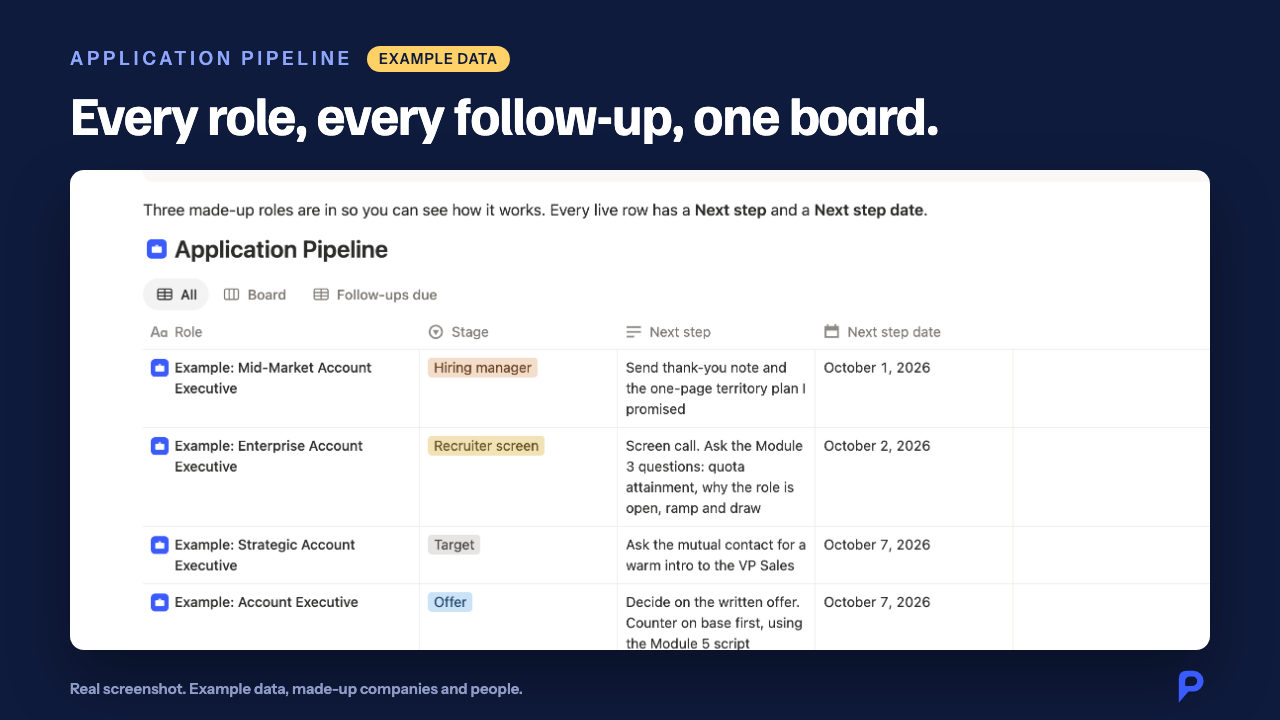
A Notion kit for sellers changing roles. It has a target list and a pipeline board with follow-ups due. It also has recruiter scripts, negotiation scripts and an offer calculator for year-one pay. £14, one payment, plus VAT for UK and EU buyers.
Principled Pitch is independent. Interview formats vary by company, so check the brief with the recruiter.