SDR manager first 90 days: learn, stabilise, improve
A new SDR manager is suddenly responsible for other people's results, pay and development. And they're still learning the job. A plan stops you changing everything on day one or drifting for three months. Split the first 90 days into three phases: learn, stabilise, improve.
SDR (sales development representative) and BDR (business development representative) are the same job at most companies. Everything here applies to both.
This plan is for you as the manager. For your reps' own first 90 days, use our SDR onboarding checklist.
Only need pay and outreach? The SDR Toolkit is £12.99 + VAT.Get the playbook
Before day one
- ☐ Ask for recent numbers: attainment, meetings held, accepted opportunities and the current plan
- ☐ Ask who your key partners are: sales leaders who take the meetings, marketing, sales operations
- ☐ Ask what your own manager expects by day 90, in writing if possible
Days 1 to 30: learn
Understand the team and the system, and build trust. People are watching to see who you are, so hold off on big changes.
- ☐ A 1:1 with every rep in the first two weeks. Ask what works, what doesn't, what they'd change and what they need from you
- ☐ Sit in on live calls and listen to recordings
- ☐ Read the comp plan, quotas, ramp plan and dashboard. Be able to explain each in your own words
- ☐ Meet sales and marketing partners and ask how they judge the meetings
- ☐ Find what already works, and protect it
- ☐ Set up a weekly 1:1 rhythm
By day 30 you can describe the funnel and each rep's strengths and gaps. You can name the three or four biggest issues, with evidence.
Days 31 to 60: stabilise
Fix the basics and make the team's operating rhythm reliable.
- ☐ Pick the two or three biggest issues from month one. For example lead quality, meeting confirmation, slow inbound follow-up or unclear handover rules
- ☐ Start a weekly scorecard per rep and for the team
- ☐ Coach one skill at a time using call reviews
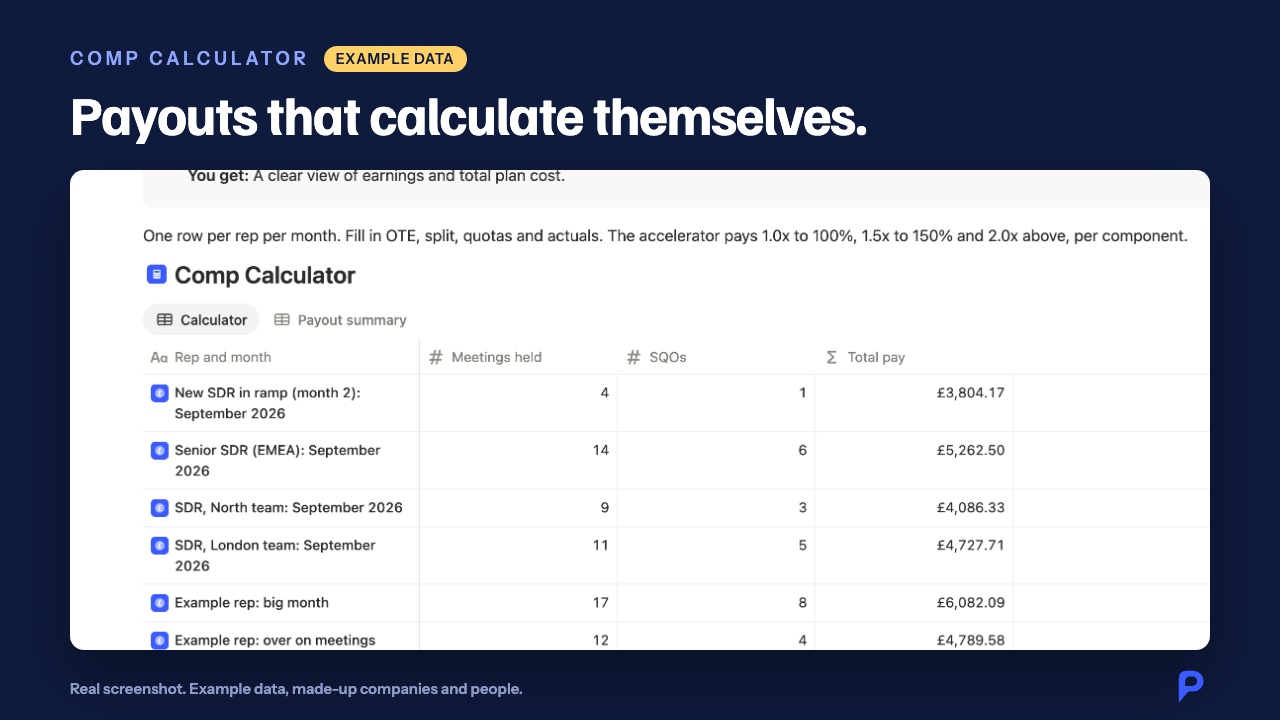
- ☐ Check the comp plan for side effects. Model any change first. Our free SDR comp plan calculator takes a few minutes. Never change it mid-period
- ☐ Write down the working rules. Lead assignment, what counts as a qualified meeting and how handover works
- ☐ Recognise good work early and specifically
By day 60 the team knows what you expect and how they're measured. They know how they'll be coached. For what to put on the scorecard, see our SDR and BDR KPIs guide.
See inside
Days 61 to 90: improve
Now start to put your own mark on the team. Base it on what the first two months showed you.
- ☐ Make one or two evidence-based improvements. Refresh messaging with your best reps, or rebalance territories. Tighten ramp for new hires, or agree new meeting criteria with sales
- ☐ Review how each rep is developing. Who is ready for a stretch, and who needs a clear improvement plan? Who could be a future AE (see our promotion criteria)?
- ☐ Share a short plan for next quarter with your manager and the team
- ☐ Check your own calendar: are you coaching enough?
By day 90 you've presented your read on the team. You've also shared a plan for the next quarter, with evidence.
A week-by-week example
Illustrative only. Adapt it to your team.
| Weeks | Focus |
|---|---|
| 1 | Meet your manager, review dashboards, meet two sales partners and hold the first three rep 1:1s |
| 2 | Finish rep 1:1s, listen to six recorded calls and read the comp plan. Write a one-page summary of what you've learnt |
| 3 | Start the weekly 1:1 rhythm, meet marketing and shadow a live outbound session. List five issues with evidence |
| 4 | Rank the issues with your manager and agree the top two |
| 5 and 6 | Work on issue one, for example a meeting confirmation step, and measure the held rate |
| 7 and 8 | Work on issue two and start the weekly scorecard in a fixed format |
| 9 and 10 | Test one change to messaging or ramp with two reps first |
| 11 and 12 | Review progress with each rep, write the next-quarter plan and present it |
Common traps
- Doing the reps' job. Your job is now developing others.
- Changing too much, too soon. Earn the evidence first.
- Avoiding hard conversations. Raise performance early and kindly.
- Going quiet with your own manager. Regular updates mean no surprises.
- Ignoring the comp plan until it causes a problem.
Questions
What should a new SDR manager do in the first 30 days?
Listen and learn. Hold a 1:1 with every rep in the first two weeks, and review calls. Learn the comp plan, quotas and dashboard. Meet sales and marketing partners. Hold off on big changes.
What should a new SDR manager fix first?
The two or three issues from month one with the most evidence behind them. Typically lead quality, meeting confirmation, inbound follow-up speed or handover rules with sales.
When should a new SDR manager change the comp plan?
Not in the first month, and never mid-period. Model the effect of any change on last quarter's results first. Then propose it for the start of the next period.
Related guides

Why SDR and BDR programmes fail
The usual causes, the warning signs and the order to fix them in.

SDR and BDR playbook template
What a good playbook includes, and how to build it in Notion.

SDR and BDR interview questions
18 questions by competency, a role-play and a weighted scorecard.

SDR to AE ratio calculator
How many SDRs and team leads your AEs need.

SDR playbook template for SaaS
Seven sections, who owns each and where to start.
Turn this into a programme you can run
14 Notion modules and 6 working trackers for SDR leaders. KPI library, comp calculator, cadence builder, interview scorecard, tool scorecard and a 90-day roadmap. £29, one payment, plus VAT for UK and EU buyers.
Treat benchmarks as starting points. Tune them to your market, deal size and sales cycle. Every figure shows its source and year.