Weekly SDR 1:1s: a 30-minute agenda for sales managers
The weekly 1:1 is where most SDR coaching happens. Problems surface there before they reach the numbers. It's also where a rep decides whether they feel looked after. It's easy to waste. Here's a structure that works, how to prepare in ten minutes and a worked example.
SDR (sales development representative) and BDR (business development representative) are the same job at most companies. Everything here applies to both.
Only need pay and outreach? The SDR Toolkit is £12.99 + VAT.Get the playbook
Four ground rules
- Make it the rep's meeting. Let them set part of the agenda. If you always talk first, they'll always wait to be told.
- Keep it regular. Same day, same time, same length. If you're busy, shorten it rather than cancel. A cancelled 1:1 tells the rep where they rank.
- Keep forecasting out. Get pipeline numbers from the dashboard before the meeting, not by interrogating the rep during it.
- End with one or two written commitments.
The 30-minute agenda
| Minutes | Block | What happens |
|---|---|---|
| 0 to 5 | Check in | How they are, how the week felt, anything blocking them. Energy and confidence show up here before they show up in the numbers. |
| 5 to 10 | Scorecard | The week's numbers against plan. Ask the rep to read them first: "What do you see?" |
| 10 to 22 | One coaching topic | One skill, not five. Review a recorded call, an email sequence or a role-play. Ask before you tell, then give one observation and one suggestion. |
| 22 to 27 | Pipeline and needs | Which accounts need attention. What the rep needs from you: an intro, a decision or a lead list fix. |
| 27 to 30 | Commitments | One or two actions for next week, written in a shared note. The rep says them back in their own words. |
For what belongs on the scorecard, see our SDR KPI dashboard guide.
Prepare in ten minutes
- ☐ Open the scorecard and note the one thing that stands out, good or bad
- ☐ Pick one call or email and review it before the meeting, not live in it
- ☐ Check whether last week's commitments happened
- ☐ Choose the single coaching topic with the biggest likely effect
See inside
Coaching questions that work
- What are you most pleased with this week?
- Where did you get stuck?
- If you could redo one conversation, which would it be?
- What was the buyer thinking at that moment?
- What would you try differently next time?
- What do you need from me?
Telling is quicker, but advice a rep works out for themselves is the advice that sticks.
A worked example
An imagined 1:1 with a rep in month three. They're on plan for activity but behind on meetings held.
| Block | What happened |
|---|---|
| Check in (3 min) | The week felt slow and the rep is tired of hearing "send me an email". The manager notes that confidence is dipping. |
| Scorecard (5 min) | Activity on plan, conversations a little low, and only 2 of 4 booked meetings held. The rep blames no-shows. The manager asks what happens between booking and the meeting: there's no confirmation step. |
| Coaching (12 min) | They listen to one call. The rep accepted a vague "send me an invite" without a reason to meet. They role-play the moment twice with a new question. "What would make this worth thirty minutes for you?" |
| Needs (5 min) | Two accounts need re-routing because the contacts have left. The manager takes that on. |
| Commitments (3 min) | Send a one-line agenda confirmation on the day of each booked meeting. Use the new question on at least five calls and bring the best one next week. |
Next week the manager opens with those two items.
What to avoid
- A status update. If you do all the talking, you aren't coaching.
- Fixing everything at once. One topic a week.
- Only meeting about problems. Name wins too, specifically.
- Feedback in front of others. Keep it private.
Keep simple records
One shared note per rep with the date, scorecard summary, coaching topic and commitments is enough. It speeds up the next 1:1 and helps with reviews. It's also a fair record if a performance conversation is ever needed. Leave out private matters unless the rep asks you to record them.
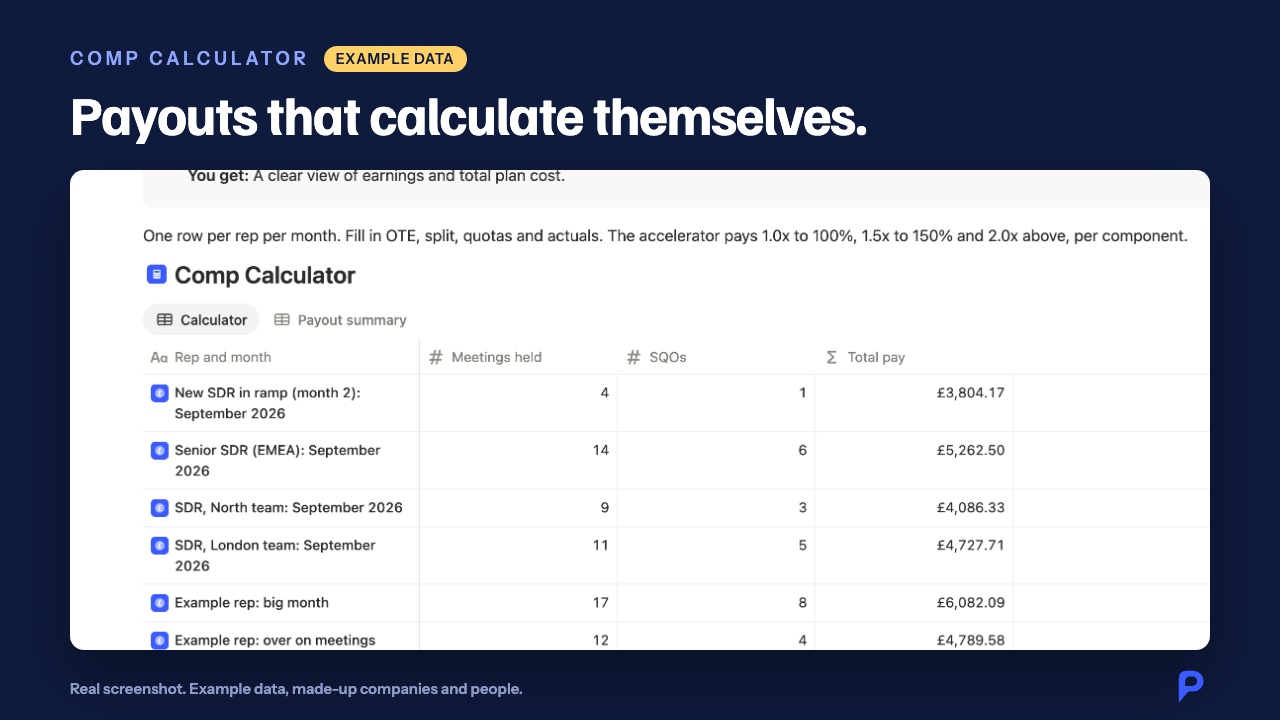
When reps ask what a good week does to their pay, show them. Use the free SDR comp plan calculator. A vague worry becomes a number you can both look at. For new reps, pair the 1:1 with our SDR onboarding checklist.
Questions
How long should an SDR 1:1 be?
Thirty minutes a week works for most teams. Five to check in, five on the scorecard and about twelve on one coaching topic. Then five on pipeline and needs, and three to agree commitments.
What should an SDR manager cover in a weekly 1:1?
How the rep is doing, and the week's numbers against plan, read by the rep first. One skill coached on a real call or email. What the rep needs from you. One or two written commitments for next week.
Should pipeline reviews happen in the 1:1?
Keep them short. Pull pipeline numbers from the dashboard beforehand. Then the 1:1 stays a coaching conversation, not an interrogation.
Also: SDR call review scorecard, SDR daily schedule template, SDR team meeting agenda, SDR performance review.
Related guides

SDR KPI dashboard template
What to show on one screen, benchmarks and what to leave off.

SDR to AE promotion criteria
Four areas to assess, a scorecard and how to say "not yet".

Cold outreach cadence templates
Four SDR cadences with timing, openers and exit rules.

SDR performance review
What to rate, a weighted scorecard and a worked example.

Cold call script for fintech
One problem, one question and the checks to run first.

SDR team meeting agenda
A 30-minute weekly layout with time boxes.
Turn this into a programme you can run
14 Notion modules and 6 working trackers for SDR leaders. KPI library, comp calculator, cadence builder, interview scorecard, tool scorecard and a 90-day roadmap. £29, one payment, plus VAT for UK and EU buyers.
Treat benchmarks as starting points. Tune them to your market, deal size and sales cycle. Every figure shows its source and year.