SDR to AE promotion criteria: how to decide who is ready
Promoting an SDR to account executive is a call the whole team watches. Get it right and you keep a motivated person and show the team a path. You also fill a seat with someone who knows the product. Get it wrong and you lose a good SDR and gain a struggling AE.
SDR (sales development representative) and BDR (business development representative) are the same job at most companies. Everything here applies to both.
Set the criteria early. There is more in our SDR ramp time guide.
Only need pay and outreach? The SDR Toolkit is £12.99 + VAT.Get the playbook
How long promotion takes
Unify's 2026 study followed about 180,000 people. They started as an SDR or BDR between January 2021 and January 2026. About 22.3% reached account executive. Among those who did, the median was 12 active SDR months. Unify says that is not a deadline.
| Finding | Figure | Source |
|---|---|---|
| Reached AE | 22.3% of about 180,000 | Unify, 2026 |
| Median months to AE, among those who got there | 12 | Unify, 2026 |
| Promoted internally | 56% | Unify, 2026 |
| Changed company to get the title | 44% | Unify, 2026 |
| Changed company as an SDR, then promoted | 22 months median | Unify, 2026 |
Read this with care. The Unify cohort is US-only. The 12-month median covers only people observed reaching AE, so it leaves out everyone still waiting. Unify also says recent starters had less time to be promoted.
For your team, publish the ladder, not a date. State the criteria, the review points and who decides. Then a rep can see what to change, whatever the average says.
Why write the criteria down
Without written criteria, promotion follows whoever pushes hardest or had the best quarter. With them, reps know what to work on. You also have a clear answer when someone isn't ready yet. Share them in onboarding and revisit them in each quarterly review.
Don't promise a timeline. Promotion depends on results and on an AE seat being open. Be honest about both.
The four areas to assess
| Area | What to look for | Where the evidence comes from |
|---|---|---|
| 1. Consistent results | Quota met across several consecutive months, with a strong rate of accepted opportunities. Results held when territory or leads changed | The dashboard over at least two quarters, not one peak month |
| 2. AE selling skills | Runs full discovery rather than just qualifying. Asks good questions and listens. Explains value in the buyer's terms and handles hard objections calmly | Shadowed AE calls and a mock discovery call. Or leading the first part of a live meeting with an AE alongside |
| 3. Behaviours | Prepares, follows up, acts on feedback, keeps the CRM clean, helps colleagues | Your weekly 1:1 notes and call reviews |
| 4. Readiness | Wants the role and understands longer deal cycles and a different kind of pressure | A direct conversation |
One great month can be luck; a steady pattern is skill. Some excellent SDRs suit a team lead or sales operations path better. That's a good outcome too.
A worked scorecard
An invented example. Score each area from 1 to 4: 1 not yet, 2 developing, 3 ready, 4 strong. Add one line of evidence for each.
| Area | Score | Evidence |
|---|---|---|
| Consistent results | 3 | Met quota in five of the last six months, with accepted opportunities above the team average. The one lower month was during a territory change |
| Selling skills | 2 | Strong first call. In the mock discovery call, jumped to the pitch before understanding the problem. Handled the pricing objection well |
| Behaviours | 4 | Always prepared, acts on feedback within the week, mentors the newest hire |
| Readiness | 3 | Wants the role, has shadowed eight AE calls and can describe how the jobs differ |
This team's rule has three parts. No score below 2. At least two scores of 3 or more. And a 3 in either results or selling skills. The rep passes on paper. But the manager chooses a six-week development plan first. That means two more mock discovery calls with feedback. And leading the first half of three live meetings. The rep knows exactly why and what to do. Adjust the rule to your team.
See inside
Make the process visible
Publish a short document with the four areas, the evidence you'll use and the steps. The steps are a manager assessment and a skills demonstration. Then a conversation with the sales leader who would take the rep, and a decision. Say how often decisions are made and who makes them. For anyone who doesn't progress, give "not yet" with specific evidence and a plan. That's far easier to hear than silence.
Plan the backfill and the pay change
Promoting your best SDR leaves a gap. Start recruiting early and decide who covers the territory. Expect the team's numbers to dip for a while. Don't hold back a ready rep to protect results. The best ones leave to get the move elsewhere. Our SDR interview scorecard helps you hire the replacement.
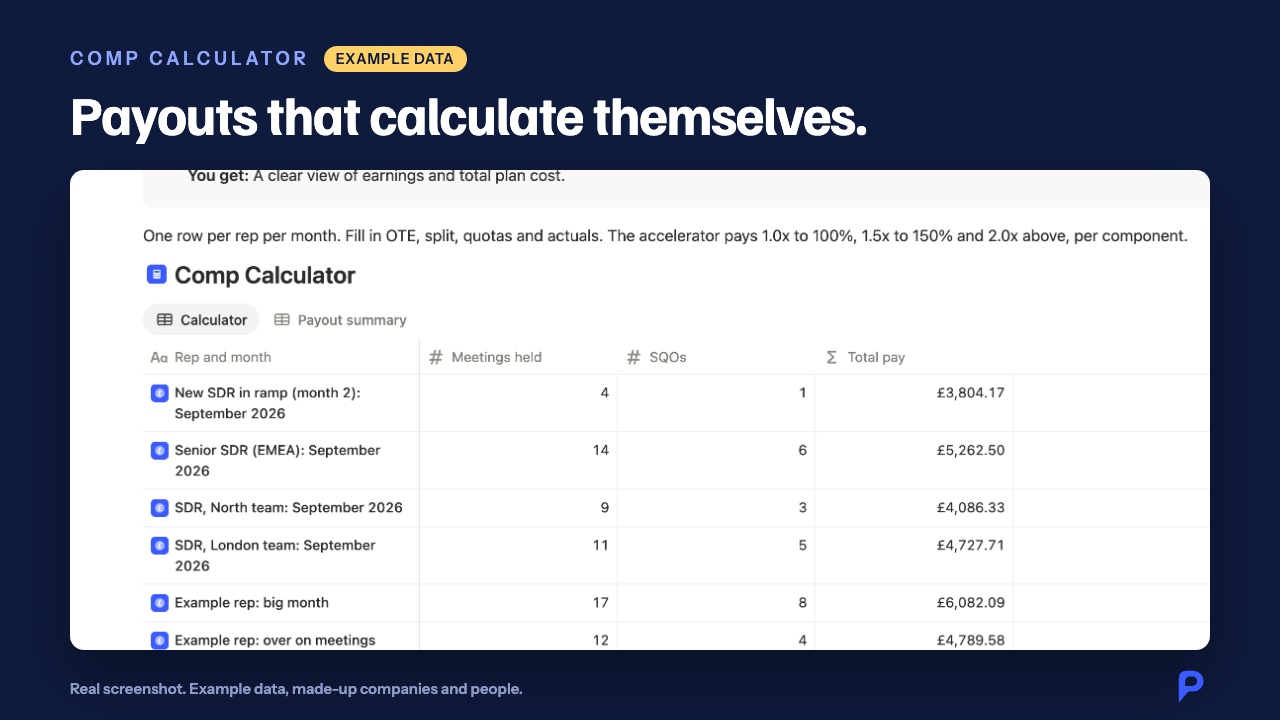
The AE plan changes the pay mix and how success is measured. Walk through it before the move, including the first few months. Model a month together in our free SDR comp plan calculator. It shows how base, variable and quota interact.
Common mistakes
- Promoting on quota attainment alone.
- Promoting someone who isn't ready to stop them leaving.
- Letting the criteria shift depending on who asks.
- Skipping the skills demonstration.
- Not asking what the rep actually wants.
Sources
Questions
When is an SDR ready for promotion to AE?
When they show consistent results over several months and can run a full discovery conversation. They work reliably with little supervision and want the role. Check each with evidence, such as a mock discovery call, rather than a hunch.
How long do SDRs usually stay in role before promotion?
Unify's 2026 US study found a median of 12 months among SDRs who reached AE. Treat that as a guide, not a deadline. Set written criteria instead.
Is it normal to wait two years for promotion to AE?
It can be. Unify found a median of 22 months for SDRs who changed company and were later promoted. Ask your manager for written criteria and review points.
What should I say to an SDR who is not ready yet?
Say "not yet" and give specific evidence against the written criteria. Agree a short development plan with a review date, such as six weeks.
Also: why SDRs leave and how to keep them, SDR performance review.
Related guides

SDR and BDR comp plans
OTE benchmarks for the UK, US and Europe, and how to design the plan.

SDR and BDR interview questions
18 questions by competency, a role-play and a weighted scorecard.

SDR KPI dashboard template
What to show on one screen, benchmarks and what to leave off.
Turn this into a programme you can run
14 Notion modules and 6 working trackers for SDR leaders. KPI library, comp calculator, cadence builder, interview scorecard, tool scorecard and a 90-day roadmap. £29, one payment, plus VAT for UK and EU buyers.
Treat benchmarks as starting points. Tune them to your market, deal size and sales cycle. Every figure shows its source and year.