SDR meeting to opportunity rate: formula, benchmarks and fixes
The meeting to opportunity rate shows how many first meetings become real pipeline. It tells you if your SDRs book meetings that turn into pipeline.
Only need pay and outreach? The SDR Toolkit is £12.99 + VAT.Get the playbook
The formula
Meeting to opportunity rate = AE-accepted opportunities divided by meetings held, times 100.
Count meetings that took place. Count opportunities only when the AE accepts them under written criteria. Booked meetings that never happened stay out of both numbers.
Worked example: an SDR holds 40 first meetings in a quarter. The AE accepts 18 as opportunities. The rate is 18 divided by 40, which is 45%.
What public sources say
Public benchmarks are vendor blogs, and each defines opportunity its own way. Use them as a range.
| Source | Figure |
|---|---|
| The Bridge Group, 2025 | Median quota: 10 held first meetings, 6 converted opportunities (ratio about 60%). |
| Cleverly, SDR KPIs, 2026 | Target 50% or more. Counts AE-accepted opportunities over meetings attended. |
| Prospeo, SDR funnel, 2026 | 35% to 42% is common. It measures a different stage, SQL to opportunity. Below 30%, audit AE criteria. |
Your own history is a better guide. Track the rate by quarter and by rep for two quarters before you set a goal.
If the rate is low
Check these in order:
- The acceptance criteria. If the AE rejects meetings for reasons never written down, reps cannot hit the bar.
- Target accounts. Meetings with the wrong company size or the wrong role rarely convert.
- Discovery. Listen to five held meetings that failed and note what the rep did not learn.
- Hand-off. If the AE gets no notes, the AE starts from zero.
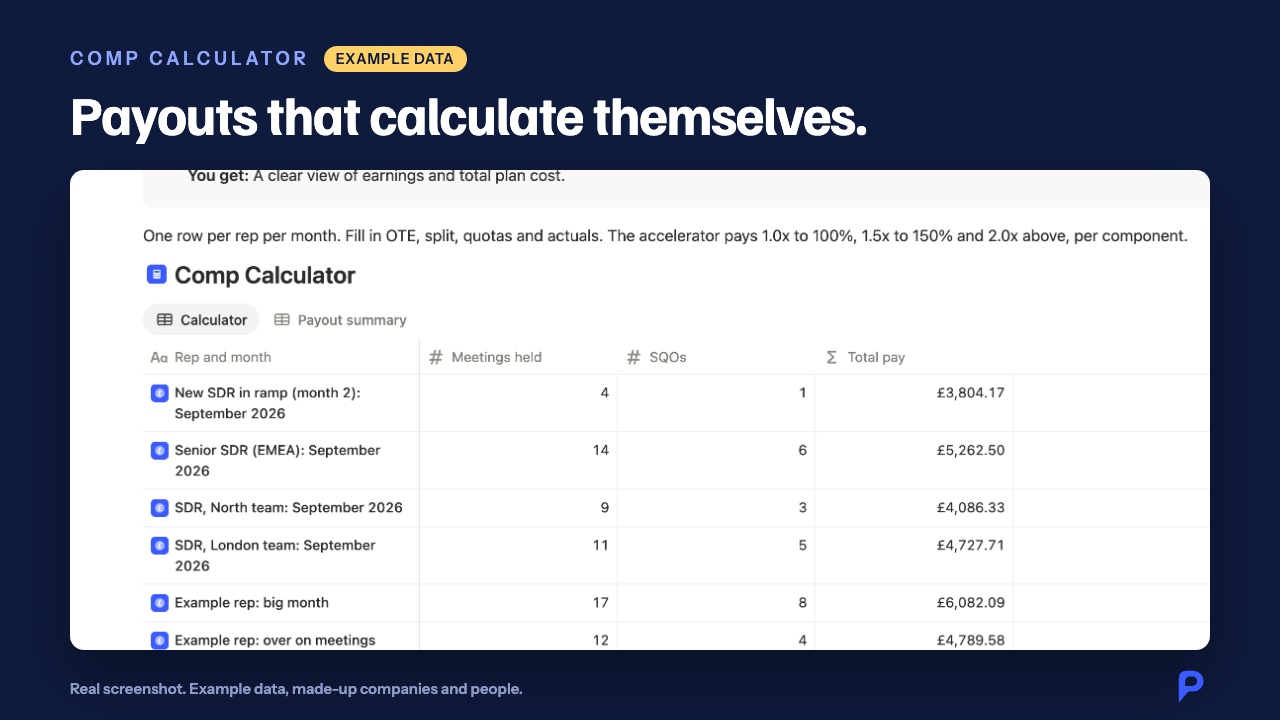
See inside
If the rate is very high
A rate near 100% can mean the AE accepts everything. It can also mean reps book only easy meetings and skip harder ones. Compare against pipeline created per rep, not the rate alone.
Where it sits on the dashboard
Put the rate next to meetings held and meetings accepted. See the SDR KPI dashboard layout and the full SDR KPI benchmarks. The SDR capacity planner uses the rate to size the team.
Next step: score the calls behind the meetings with the free SDR call scorecard.
Sources
- The Bridge Group, SDR Models, Motions and Metrics, 2025 edition
- Cleverly, SDR KPIs and metrics, 2026
- Prospeo, SDR funnel: stages, benchmarks and math, 2026
Questions
What is a good SDR meeting to opportunity rate?
Public sources range from about 35% to 60%. Define opportunity in writing first, then track your own rate.
Should SDRs be paid on opportunities?
Many plans pay on meetings accepted. Opportunities depend on the AE's work too, so weight them with care.
What is the difference between meeting accepted and opportunity?
Accepted means the AE agrees the meeting met the bar. An opportunity means the AE has opened a deal in the CRM.
Also: SDR lead qualification checklist, how to reduce no-shows, lead scoring template.
Related guides
SDR and BDR KPIs
What to measure, and 2024-2025 benchmarks to sense-check against.

Outbound SDR metrics
Call connect rates, email reply rates and sequence benchmarks.

SDR KPI dashboard template
What to show on one screen, benchmarks and what to leave off.

SDR meeting handoff notes
Seven fields an AE needs before accepting a meeting.
SDR meetings needed calculator
Work back from a revenue goal to the meetings your SDRs must hold.
Turn this into a programme you can run
14 Notion modules and 6 working trackers for SDR leaders. KPI library, comp calculator, cadence builder, interview scorecard, tool scorecard and a 90-day roadmap. £29, one payment, plus VAT for UK and EU buyers.
Treat benchmarks as starting points. Tune them to your market, deal size and sales cycle. Every figure shows its source and year.